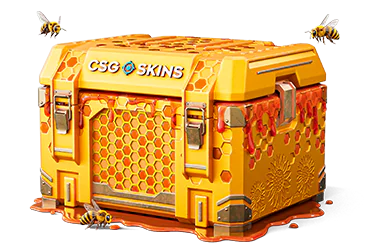


Case Overview
The case combines standard weapon skins with a rare special-item tier at the upper end of the pool. This places it in the variance-heavy segment of third-party CS2 cases: many outcomes sit in lower and middle value bands, while a limited set of premium items contributes disproportionately to theoretical return. Pool quality should therefore be assessed through the full probability table, not only through the maximum listed item. Skin type, exterior condition, liquidity and current demand can materially change realized value.
Value and Risk Factors
Expected value is the probability-weighted average of all possible outcomes, so a high-value rare tier can raise theoretical EV without making the typical opening comparable to that average. Honey Case should be evaluated through median outcome, downside concentration, tail probability and variance. A wide gap between common and premium items increases dispersion and makes short samples unstable. Expected return can also change when skin quotations move, especially for scarce items with thinner liquidity. Stable demand across the middle of the pool generally reduces valuation sensitivity, while dependence on a few premium outcomes increases risk concentration.